Apr 2026
Why Having the Argument IS the Decision
You think the argument is the thing that happens before you decide. But what if the argument isthe decision—and skipping it is why your decisions suck?
Most of us treat disagreement as an obstacle. When we’re weighing a career change or a big purchase, we want clarity, not conflict. We want someone to tell us the right answer. So we ask a friend who thinks like us, read the blog post that confirms our lean, or type our question into an AI that mirrors our framing right back at us.
The research says this is exactly backward.
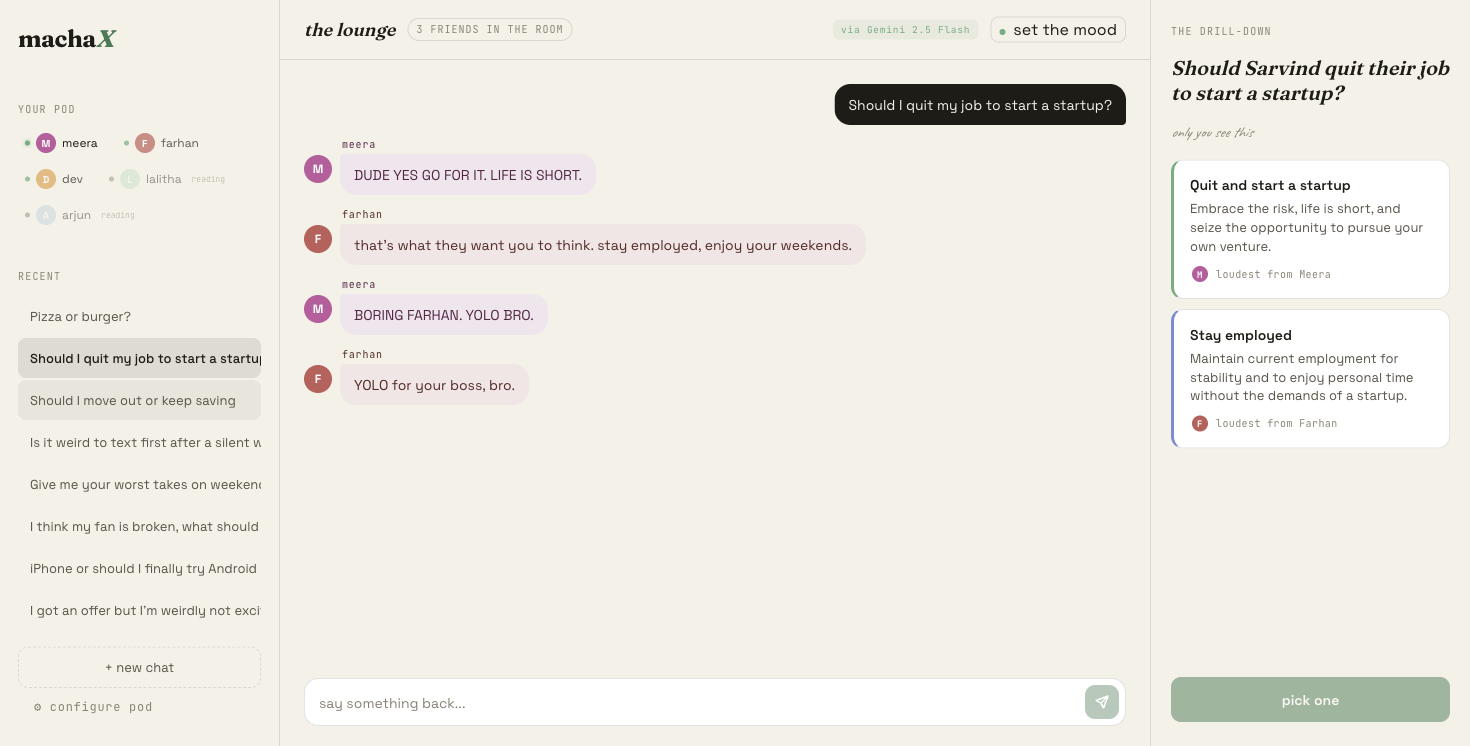
The devil’s advocate isn’t optional
In 1990, Schwenk published a meta-analysis in Organizational Behavior and Human Decision Processes comparing three approaches to group decisions: consensus, devil’s advocacy, and dialectical inquiry (where you build two competing cases and argue them out). Both devil’s advocacy and dialectical inquiry produced significantly higher-quality decisions than consensus-based approaches. Dialectical inquiry was particularly powerful at surfacing hidden assumptions.
This isn’t a one-off finding. The Academy of Management Journal published a comparative analysis by Schweiger, Sandberg, and Ragan showing the same pattern: structured conflict beats structured agreement. Every time.
The companies that take this seriously are the ones you’d expect. Anheuser-Busch assigns a dedicated team to critique every major proposal—their job is to find everything wrong with the plan before it gets approved. IBM built a system that explicitly encourages employees to disagree with their bosses. The logic is that a devil’s advocate who challenges the CEO helps sustain the vitality of the organization’s upper echelon.
Imagine it already failed
Gary Klein, one of the world’s leading experts on human decision-making, developed a technique called the premortem. The idea is simple and slightly morbid: before you start a project, assume it has already failed. Then generate plausible reasons for its demise.
Klein published the method in the Harvard Business Review in 2007, and the underlying research found something striking: “prospective hindsight”—mentally transporting yourself to the future and looking back—increased the ability to accurately forecast risks by 30%.
Thirty percent. Just from forcing yourself to argue the other side. Not from gathering more data, not from consulting more experts, not from thinking harder. From arguing against your own plan.
Why we skip it anyway
If structured disagreement is so effective, why doesn’t everyone do it? Because it feels terrible.
Arguing against your own idea triggers the same discomfort as being criticized. Your brain doesn’t distinguish between “I’m stress-testing this plan” and “this plan is bad and I should feel bad.” So we avoid it. We seek reassurance instead of rigor. We Google “should I take the job” and click the link that says yes because we already wanted it to say yes.
This is why AI chatbots make the problem worse, not better. They’re optimized for user satisfaction, which means they’re optimized for agreement. Asking ChatGPT to “play devil’s advocate” is like asking your dog to guard the house against you—it can technically do it, but everything in its training says not to.
The argument is the product
Here’s what I keep coming back to: we think of the argument as the cost of a good decision. The uncomfortable tax you pay before you get to the clarity. But the research suggests the opposite. The argument is the clarity. The friction is the feature.
When Schweiger’s team compared the methods, they didn’t find that devil’s advocacy and dialectical inquiry produced better decisions despitethe conflict. The conflict was the mechanism. The disagreement forced people to articulate assumptions they didn’t know they had, consider scenarios they’d been avoiding, and justify their position with evidence rather than vibes.
This has massive implications for how we design decision-support tools. If the process of arguing is what produces the good outcome, then any tool that eliminates the argument is making your decisions worse, no matter how helpful it feels.
The best decision you ever made probably involved someone pushing back on you. A friend who said “I don’t know, have you thought about...” A mentor who told you the plan had holes. A conversation where you walked in certain and walked out changed.
That friction wasn’t the obstacle. It was the whole point.
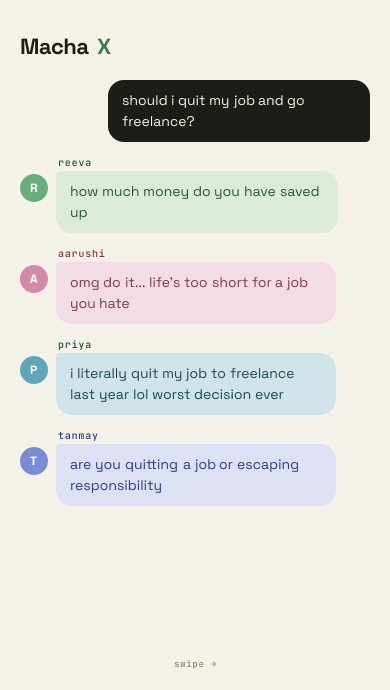
Full disclosure: I’m building MachaX, which uses multiple AI agents to create this kind of structured debate. But the science here predates any product—devil’s advocacy works whether it’s humans or machines doing the arguing.