Apr 2026
The Paradox of Infinite Advice
You have a question about your career. So you read 12 Reddit threads, watch 4 YouTube videos, skim a podcast transcript, and ask ChatGPT. Two hours later, you know everything and have decided nothing.
Welcome to the paradox of infinite advice. We have access to more opinions, perspectives, and information than any generation in human history. And we are, by several measures, worse at making decisions than ever.
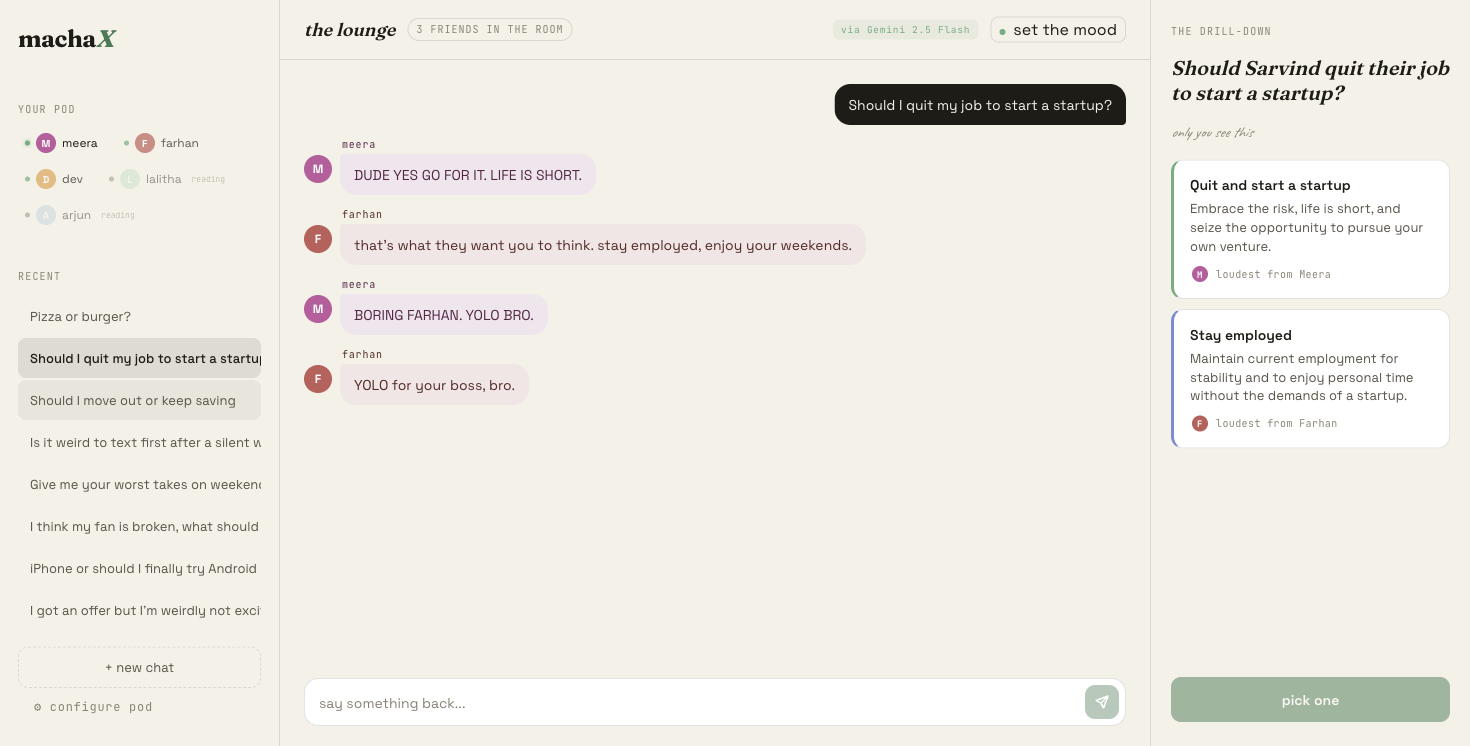
The jam problem, scaled to infinity
In 2000, psychologists Sheena Iyengar and Mark Lepper ran what became one of the most cited experiments in behavioral economics. They set up a jam-tasting booth at a grocery store. Some days they displayed 24 varieties; other days, just 6. The table with 24 jams attracted more browsers—but the table with 6 jams generated ten times more purchases.
More options, less action. Barry Schwartz built an entire thesis around this finding in his 2004 book The Paradox of Choice: Why More Is Less. His key insight was the distinction between “maximizers”—people who exhaustively search for the best option—and “satisficers”—people who settle for good enough. Maximizers, despite doing more research, consistently reported worse outcomes and lower satisfaction.
Now, the jam study has been contested. A 2010 meta-analysis by Benjamin Scheibehenne found an average nil effect across replications, though the actual results varied widely—sometimes more choice helped, sometimes it paralyzed. But the broader point about information overload has only gotten stronger with time. Schwartz wasn’t really talking about jam. He was talking about what happens when every decision becomes an infinite research project.
The advice spiral
Here’s what’s changed since Schwartz wrote his book: we’re no longer just choosing between products. We’re choosing between advice about choosing.
Thinking about switching careers? There’s a subreddit for that. Multiple subreddits, actually. Plus a career coach on TikTok who says follow your passion, a LinkedIn influencer who says passion is a lie, a podcast interview with someone who did exactly what you’re considering and loved it, and another with someone who did the same thing and regretted it profoundly.
Each piece of advice is individually reasonable. Collectively, they cancel each other out. You end up with a mental model that looks less like a decision tree and more like a plate of spaghetti.
Then you ask an AI. And the AI, trained on all of that same contradictory advice, gives you a beautifully formatted synthesis that somehow manages to say everything and nothing. “It depends on your priorities.” Thanks. Very helpful.
Information is not synthesis
The mistake we keep making is conflating information with understanding. Ten Reddit threads aren’t ten perspectives on your problem. They’re ten perspectives on someone else’s problem that looked vaguely similar to yours.
What you actually need isn’t more information. It’s a structure for processing the information you already have. The career-change question isn’t “what do other people think about career changes?” It’s “what are the three strongest arguments for and against my specificcareer change, and which ones actually hold up under scrutiny?”
That’s not a Google search. That’s a debate. And it requires something most information sources can’t provide: genuine pushback on your reasoning, applied to your specific situation.
From browsing to arguing
Think about the best advice you’ve ever received. It probably wasn’t from a search result. It was from a conversation where someone understood your situation, pushed back on your assumptions, and helped you see something you couldn’t see alone.
The paradox of infinite advice is that what we need isn’t more advice at all. We need less advice and more argument. Not argument in the combative sense—argument in the structured sense. Thesis, antithesis, synthesis. Here’s the case for, here’s the case against, here’s what survives when you smash them together.
Schwartz’s satisficers had it right all along. The answer to decision paralysis isn’t researching harder. It’s constraining the frame, forcing the arguments into the open, and picking the option that survives honest scrutiny—not the one that accumulated the most upvotes.
The next time you catch yourself opening a thirteenth browser tab on the same question, close them all. Write down the two strongest arguments on each side. Pick the one you can live with even if it’s wrong. That’s not settling. That’s deciding.
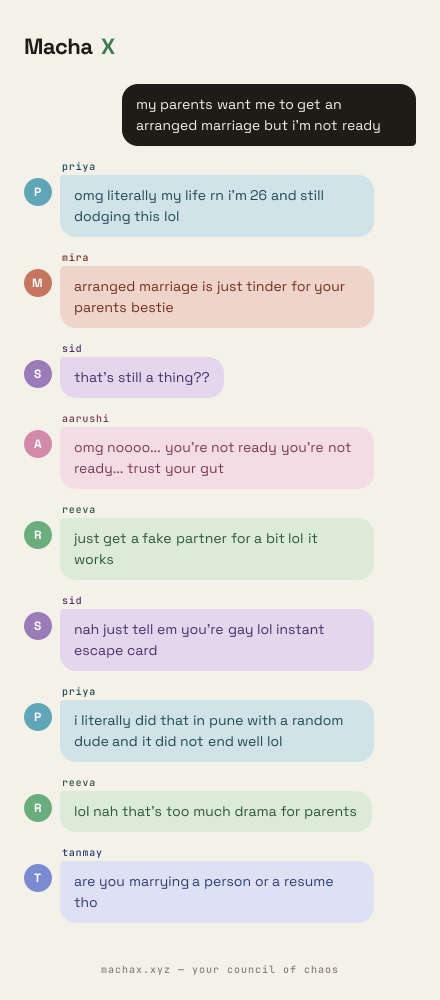
BTW: I’m building MachaX, which tries to turn this kind of structured debate into a tool instead of a discipline.